Khaptad National Park
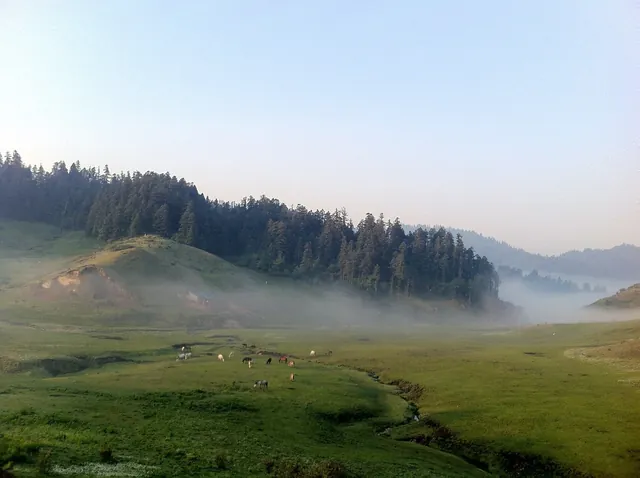
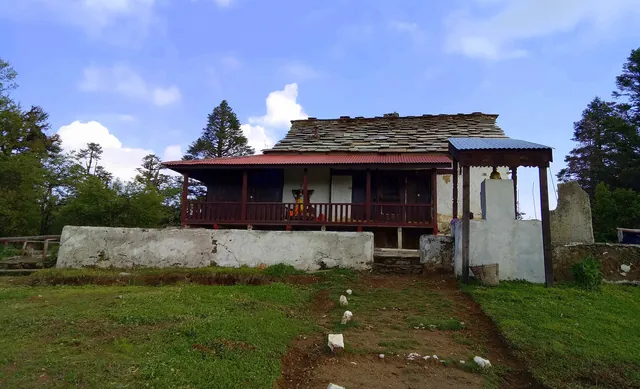
A high, rolling plateau of grassland and forest in the far west, long a place of retreat: the hermit Khaptad Baba lived here for more than fifty years, and his ashram, Triveni Dham and the shrine of Sahasra Linga still draw pilgrims. On a clear day Api and Saipal stand along the horizon.
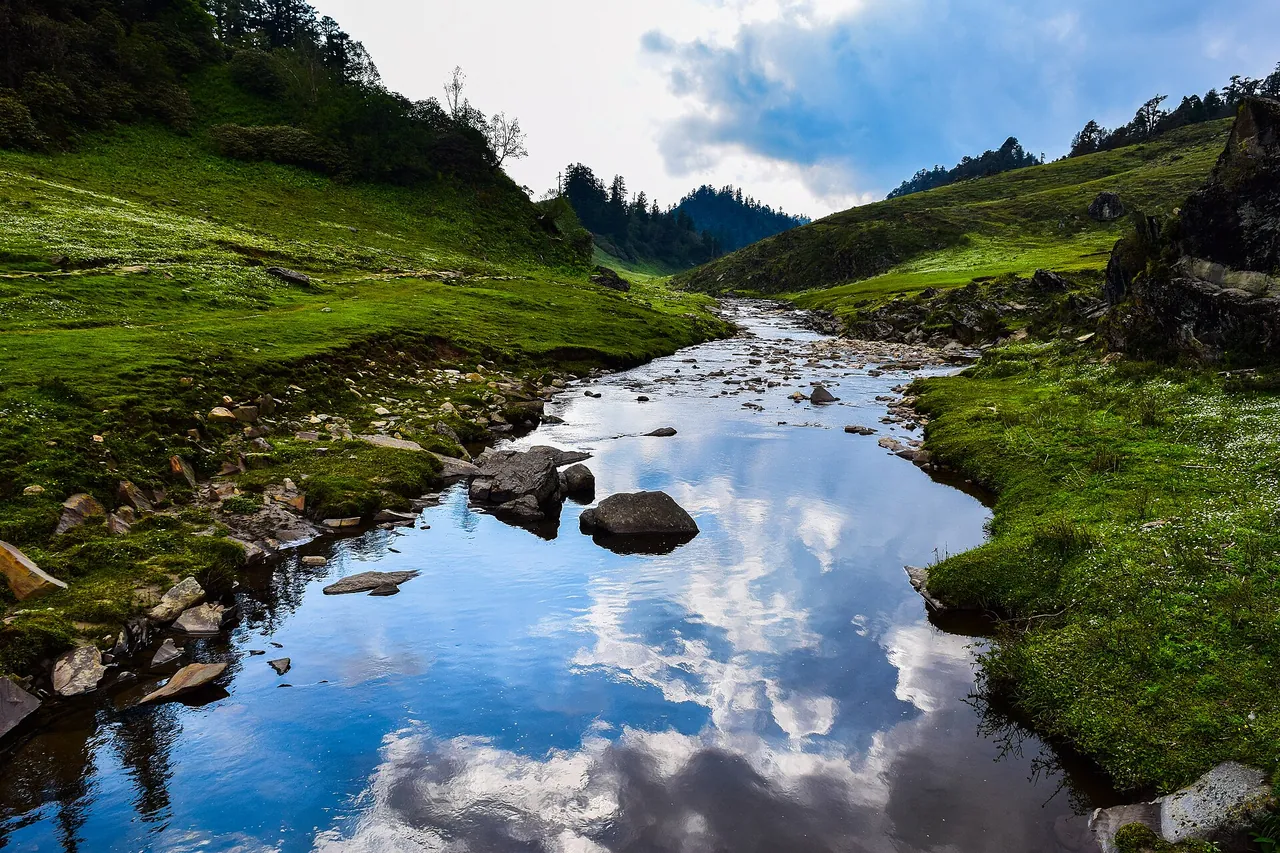

Walking days: 4–7 · Highest point: Sahasra Linga 3,200 m · Difficulty: Moderate · Best months: Mar, Apr, May, Oct, Nov · Start and end: Jhigrana · Protected area: Khaptad National Park
Photos


First time? How to plan this trek
Getting there
Fly from Kathmandu to Dhangadhi, about an hour, then go by road to Silgadhi in Doti, about 7 to 8 hours. A jeep takes you on to the park entrance at Jhigrana, where the road ends. From there it is a steep walk through forest: about 8 hours to the plateau for fit walkers, or two easier days with a night at Bichpani. There are also ways in from Bajhang, Bajura and Achham.
The route
- Silgadhi
- Jhigrana
- Bichpani
- Triveni Dham
- Khaptad park headquarters
- Khaptad Baba Ashram
- Khaptad Daha (lake)
- Sahasra Linga — 3,200 m
How many days do I need?
Allow at least 7 days from Kathmandu and back, plus a spare day or two for roads and weather. Seeing all of the park takes about a week on its own.
- Day 1: fly to Dhangadhi and drive to Dipayal.
- Day 2: jeep to Jhigrana, then walk uphill to Bichpani (about 5 hours).
- Day 3: walk to the park headquarters by way of Triveni Dham (about 5 hours).
- Day 4: Sahasra Linga, Khapar Daha lake and Jagannath Temple.
- Day 5: walk back down through Bichpani to Jhigrana and drive to Dipayal.
- Day 6: drive back to Dhangadhi.
- Day 7: fly to Kathmandu.
First time? How to plan this trek
Know before you go
Beds are scarce. New guest houses begun in 2019 were still unfinished in August 2025, and you may share a crowded room or need a tent, so please carry warm layers and arrange your stay and food before you set off. There's little or no electricity or phone signal, which makes it hard to call for help. Snow covers the plateau for about three months in winter, and June to September is wet. The climb to more than 3,000 m is steep, so take it gently.
The Tourism Board lists this route only as part of "Poon Hill–ABC Trek"; it does not say whether Poon Hill alone needs a licensed guide. Ask a registered trekking agency.
Most of these treks go above 3,000 m. The US CDC advises: once above 3,000 m, sleep no more than 500 m higher each night, add an extra day for every 1,000 m you gain, never go higher with symptoms (headache, nausea, dizziness), and go down if they get worse.
Permits you need
- Khaptad National Park entry permit: NPR 3,000 (not confirmed by an official source)
Fees and rules checked on 2026-11-02.
Treks
- Badimalika (Far-western Nepal): A high Hindu shrine at about 4,200 m in Bajura, in the far west, honoured as one of Nepal's Shakti Peethas, where legend says Sati's left shoulder fell. Pilgrims climb through wide alpine meadows, the patans, with views of Api and Saipal, and thousands come for the great fair at Janai Purnima.
- Annapurna Base Camp (Annapurna region): A walk into the Annapurna Sanctuary, a ring of peaks above 7,000 m, to base camp at 4,130 m, passing below Machapuchare (Fishtail).
- Mardi Himal (Annapurna region): A newer ridge trek, opened in 2012, east of Annapurna Base Camp, climbing through forest to open ridges and a viewpoint at about 4,500 m below Machapuchare.
Sightseeing
Kathmandu Valley: Three old royal cities, Kathmandu, Patan and Bhaktapur, and the temples and stupas around them. Seven of the valley's monument zones together form one UNESCO World Heritage Site, inscribed in 1979.
Sources disagree
- Park entry fee, foreigners: NPR 3,000 (Nepal Tourism Board park fees page); NPR 1,000 (Nepal Tourism Board Khaptad page); NPR 3,390 (2019) (Setopati)
- Park entry fee, SAARC nationals: NPR 1,500 (Nepal Tourism Board park fees page); NPR 100 (Nepal Tourism Board Khaptad page)
- Park entry fee, Nepali citizens: NPR 100 (Nepal Tourism Board park fees page); free (Nepal Tourism Board Khaptad page, Setopati (2019))
- Highest point: Sahasra Linga, about 3,200 m (Nepal Tourism Board); park reaches 3,276 m (Buddha Air); park reaches 3,300 m (Wikipedia, Mero Auto); Sahasralinga about 12,000 ft (The Kathmandu Post (2022))
- Lowest altitude of the park: 1,400 m (Wikipedia); 1,262 m (Buddha Air)
- Khaptad Baba's hermitage: about 11,000 ft (The Kathmandu Post (2022)); plateau about 3,200 (Nepali Times (unit not stated)); park about 3,000 m (Onlinekhabar (2021))
- Jhigrana to the plateau: about 8 hours for fit walkers, overnight at Bichpani in that article's itinerary (Nepali Times (2021)); about 8 hours from Jhigrana to the core area (Mero Auto (2026)); two days: about 5 hours to Bichpani, about 5 hours to park headquarters (Buddha Air)
- Drive from Dhangadhi to Silgadhi: about 7 hours (Buddha Air); about 8 hours by bus (Onlinekhabar (2021)); about 10 hours, in a passage we could not make sense of (Nepal Tourism Board)
- Jeep from Silgadhi to Jhigrana: about 1.5 hours (Buddha Air, Nepali Times); about 1 hour (Onlinekhabar (2021))
- Ganga Dashahara fair date: Jestha Shukla Dashami (The Himalayan Times (2026)); 10th day of the lunar fortnight in Jestha (The Kathmandu Post (2022)); Jestha–Ashadh (Buddha Air)
- Lodging inside the park: camping (Nepal Tourism Board, Mero Auto); only one lodge, near the Nepal Army barracks (The Kathmandu Post (2022)); guest houses near Khaptad, and a pilgrim house near Kedar Dhunga (Buddha Air)
Sources
- Nepal Tourism Board — Khaptad National Park
- Nepal Tourism Board — Park entry fees
- Nepal Tourism Board — Trekking permits (restricted areas)
- Nepal Tourism Board — TIMS Card
- Wikipedia — Khaptad National Park
- Wikipedia — Khaptad Baba
- The Kathmandu Post — Khaptad's tourist accommodation plan left in limbo (31 August 2025)
- The Kathmandu Post — Millions spent on infrastructure, yet Khaptad struggles to attract tourists (24 February 2024)
- The Kathmandu Post — Khaptad, destination for all seasons (27 September 2022)
- The Himalayan Times — Nepali Army conducts free health camp at Khaptad festival (27 May 2026)
- Ekantipur — Tourists coming to Khaptad suffer unorganized stay (30 August 2025)
- Nepali Times — Holy hike to the sacred Khaptad plateau (24 March 2021)
- Buddha Air — Spiritual Khaptad
- Onlinekhabar — Visiting Khaptad, the crown of the far west (6 February 2021)
- Setopati — Khaptad National Park (17 January 2019)
- Mero Auto — Ride Nepal Series, Part 10: Khaptad (23 January 2026)
- US CDC Yellow Book — High-altitude travel and altitude illness
Start here · Trekking · Sightseeing · Adventure · Pilgrimage
General guidance from the sources listed, not a guarantee. Rules, fees and trail conditions change; confirm with the official source or a registered trekking agency before you go.