Tilicho Lake
A glacial lake about 4 km long at 4,919 m in the Annapurna range, usually visited as a side trip of two or three days from Manang on the Annapurna Circuit, with a steep climb from base camp.
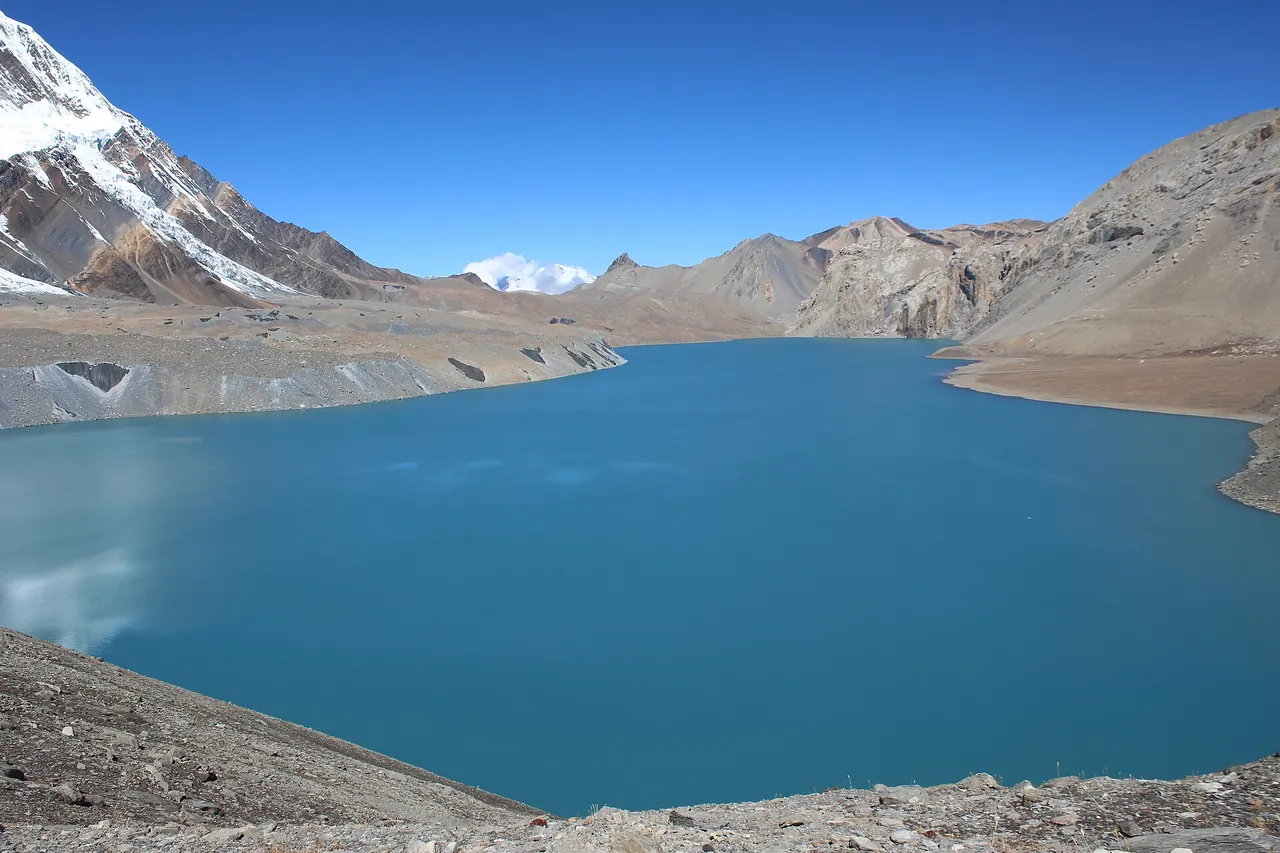

Walking days: 2–3 · Highest point: Tilicho Lake 4,919 m · Difficulty: Challenging · Best months: Mar, Apr, May, Sep, Oct, Nov · Start and end: Manang → Yak Kharka · Protected area: Annapurna Conservation Area
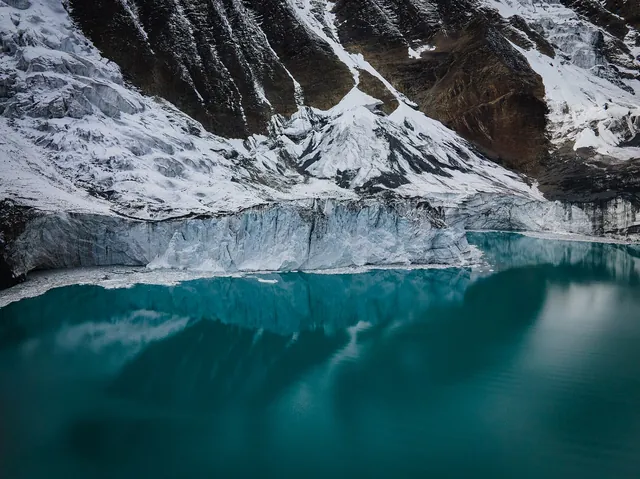
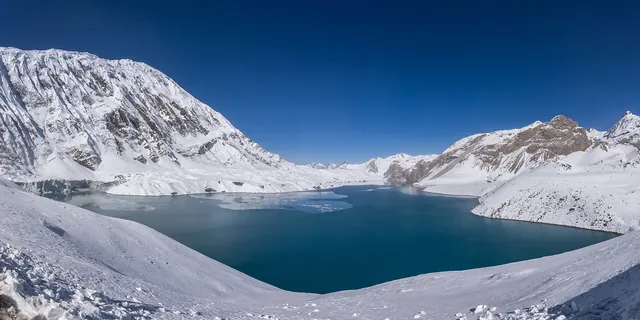
Photos


First time? How to plan this trek
Getting there
Most people come while walking the Annapurna Circuit and turn off at Manang, then go through Khangsar and Shree Kharka to Tilicho Base Camp. A road has reached Khangsar, about three hours by vehicle from Chame in a 2020 report, so please ask about current jeeps when you plan. A newer trail from Jomsom over Masokondo Pass opened in 2024, but it has no hotels or restaurants, so you would need to carry food and arrange your own shelter.
The route
- Manang — 3,519 m
- Khangsar — 3,734 m
- Shree Kharka — 4,050 m
- Tilicho Base Camp — 4,100 m
- Tilicho Lake — 4,919 m
- Yak Kharka
How many days do I need?
Add 2–3 days to your Annapurna Circuit plan for the side trip from Manang, and rest in Manang first. One agency allows 5–7 trekking days from the Manang area, so a slower pace is perfectly reasonable.
- Before you start: at least one rest day in Manang, with a walk higher up.
- Day 1: Manang through Khangsar to Shree Kharka (about 4,050 m), or on to Tilicho Base Camp (about 6 km further).
- Day 2: leave base camp very early, climb steeply to the lake (about 5 km) and come back down the same day. There is no sleeping at the lake.
- Day 3: from near Shree Kharka, take the signposted path through Old Khangsar to Yak Kharka (about 10 km) and rejoin the Circuit.
First time? How to plan this trek
Know before you go
Please leave base camp early: cloud can form by 8 am and wind builds by 11 am. Take the upper path from Khangsar, because the lower one is prone to landslides, and keep to the route your guide advises above Shree Kharka, where one branch is marked as dangerous. Snow can arrive in autumn too: in late October 2025 about 800 trekkers turned back from base camp and guided groups were let through gradually afterwards. The lake has no beds, so you will need to be back at base camp the same day. Altitude is the main danger, so please acclimatise in Manang first.
A licensed guide is required on this trek (Nepal Tourism Board rule since 31 March 2023).
Most of these treks go above 3,000 m. The US CDC advises: once above 3,000 m, sleep no more than 500 m higher each night, add an extra day for every 1,000 m you gain, never go higher with symptoms (headache, nausea, dizziness), and go down if they get worse.
Permits you need
- Annapurna Conservation Area entry permit: NPR 3,000
- TIMS card (Trekkers' Information Management System): NPR 2,000
Fees and rules checked on 2026-11-02.
Treks
- Annapurna Circuit (Annapurna region): A long loop around the Annapurna massif, from green rice terraces to the high, dry Manang valley and over the Thorong La pass at 5,416 m to the temple town of Muktinath.
- Annapurna Base Camp (Annapurna region): A walk into the Annapurna Sanctuary, a ring of peaks above 7,000 m, to base camp at 4,130 m, passing below Machapuchare (Fishtail).
- Ghorepani Poon Hill (Annapurna region): A short, popular trek through rhododendron forest to Ghorepani and the sunrise viewpoint of Poon Hill, facing Dhaulagiri and the Annapurnas, often looping back through Ghandruk.
Sightseeing
Kathmandu Valley: Three old royal cities, Kathmandu, Patan and Bhaktapur, and the temples and stupas around them. Seven of the valley's monument zones together form one UNESCO World Heritage Site, inscribed in 1979.
Sources disagree
- Tilicho Lake altitude: 4,919 m (Wikipedia, The Kathmandu Post, Nepal News); 4,949 m (another source cited by Wikipedia); about 4,920 m (Wikivoyage)
- Tilicho Base Camp: 4,100 m (Wikivoyage); 4,140 m (Himalayan Hero); 4,000 m (Nepal News)
- Manang: 3,540 m (Himalayan Hero); 3,519 m (already on this site's Annapurna Circuit entry (Wikipedia; not re-opened for this research))
- Walking days: 2-3 from Manang (Wikivoyage); 5-7 from the Manang area (Himalayan Hero)
- Annapurna permit fee: foreigners NPR 3,000; SAARC NPR 1,000; Nepali NPR 100 (Nepal Tourism Board park entry fees); foreigners NPR 2,000; SAARC NPR 200; Nepali free (Nepal Tourism Board Annapurna page (looks out of date))
- Sleeping at base camp: accommodation exists but is more limited than in Manang (Himalayan Hero); most trekkers camp here (The Kathmandu Post (2020))
Sources
- Wikipedia — Tilicho Lake
- Wikivoyage — Annapurna Circuit (Tilicho side trip)
- Nepal Tourism Board — Park entry fees
- Nepal Tourism Board — TIMS Card
- Nepal Tourism Board — Annapurna Conservation Area (seasons)
- The Kathmandu Post — Manang: mountains, alpenglow and festivals (1 February 2020)
- The Kathmandu Post — Around 800 tourists return from Tilicho Base Camp (28 October 2025)
- Nepal News — Tilicho and Thorong La routes after snowfall (2 November 2025)
- Himalayan Hero — Tilicho Lake Trek guide (trekking agency, 11 August 2026)
- CEOtab — New trekking route to Tilicho Lake from Jomsom (22 September 2024)
- National Trust for Nature Conservation — ePermit
- US CDC Yellow Book — High-altitude travel and altitude illness
Start here · Trekking · Sightseeing · Adventure · Pilgrimage
General guidance from the sources listed, not a guarantee. Rules, fees and trail conditions change; confirm with the official source or a registered trekking agency before you go.