Boudhanath (Boudha)
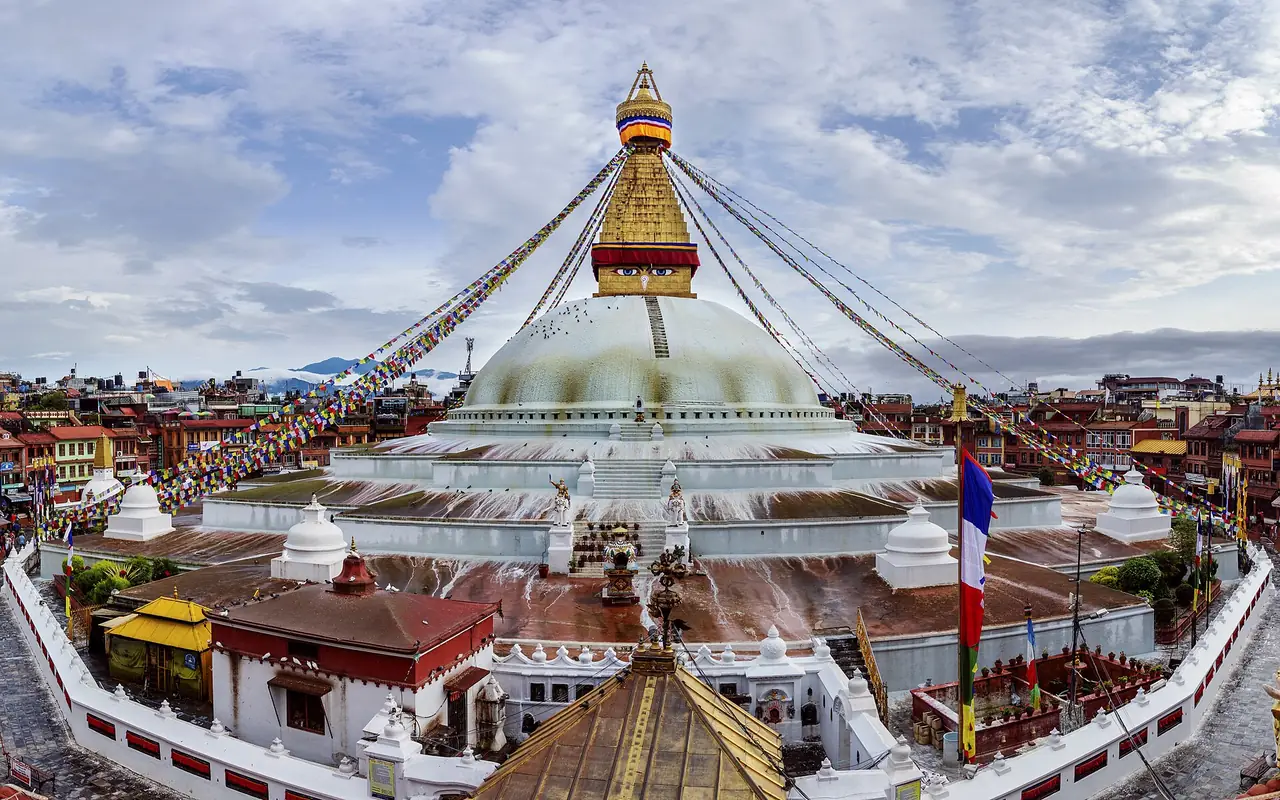
Boudhanath is one of the largest stupas in the world, 36 m high, in north-east Kathmandu and part of the valley's UNESCO World Heritage Site since 1979. Tibetan refugees settled around it after 1959, and more than 50 monasteries now stand in the lanes of Boudha, which feels like a small Tibetan town gathered round its great white dome.

Getting there
Micro buses and buses from Kantipath or the Jamal bus stand cost about NPR 30, Wikivoyage says; the conductors call out 'Chabahil, Boudha', and it is kind to ask them to tell you where to get off, as there are no English signs. From Chabahil junction the gate is a 20-minute walk or a 5-minute ride. By taxi, ask for 'Boudha Stupa Main Gate' and agree the fare before you set off. Pashupatinath is about a 20-minute walk away, past several temples.
Sites and entry fees
Fees are per person, in Nepali rupees, as published by the bodies that collect them.
- Boudhanath Stupa: NPR 400 (SAARC nationals: NPR 100). The great stupa, rebuilt after the 2015 earthquake cracked its spire and reopened on 22 November 2016, the first quake-damaged World Heritage monument in the valley to be restored. The ticket counter was open 10 am to 5 pm in 2022.
- Shechen Monastery: No fee found. A large, peaceful monastery in the alleys near the stupa, with a garden. Please follow monastery etiquette and ask before taking photos.
- Kopan Monastery: No fee found. A monastery on a hill near Boudha, founded in 1969, known for teaching Buddhism to visitors. It runs introductory and silent-retreat courses and, since 1971, a month-long November course; book ahead through its official site.
Fees change; check the official source before you go. Fees and rules checked on 2026-11-02.
Photos



Know before you go
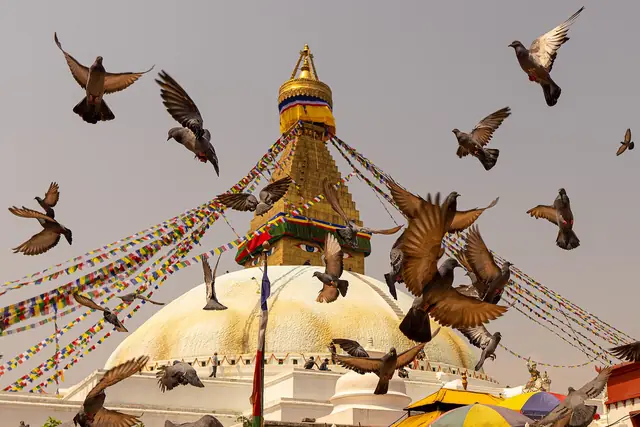
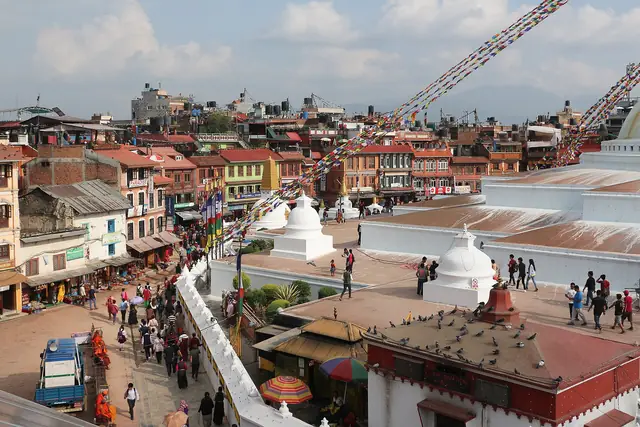
Please walk clockwise around the stupa, keeping it on your right, as everyone else does. Take your shoes off before entering monasteries, switch off your phone, ask before wandering the grounds and before taking photographs, as these are places of practice. Buy your ticket at the gate even if you are staying nearby: the development committee has warned guides and hotels against bringing visitors in without one, and the fee pays for the site. Shops and restaurants mostly close around 8 pm, and Wikivoyage warns of robberies at night in at least one very narrow, dark alley, so keep to lit lanes after dark.
What you'll see
- The stupa is 36 m high and laid out as a mandala; the present structure most likely dates from the 14th century, though chronicles mention a stupa here as early as the 5th century.
- Its rebuilding after the 2015 earthquake was paid for entirely by private donations, about US$2.1 million and more than 30 kg of gold.
- On the far side from the main gate, daytime visitors can climb up onto the stupa's terraces.
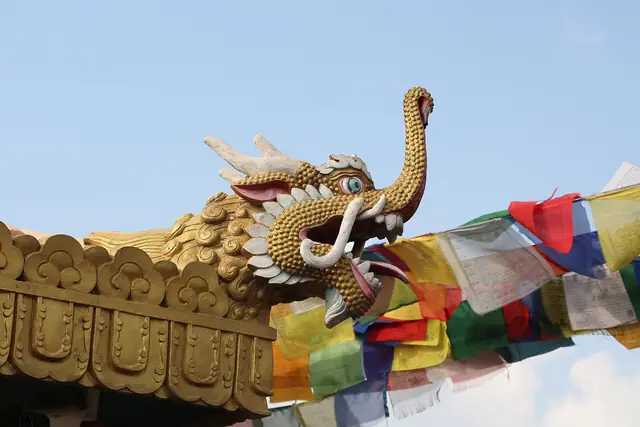
- Workshops in the lanes make singing bowls, Tibetan drums and prayer flags.
- At night the stupa is floodlit, and on full moon days it is lit up especially brightly.
When to go
- Buddhists usually walk the kora, the circuit around the stupa, in the morning or the evening, so those are the most atmospheric times to come.
- In the early morning many devotees walk clockwise around the stupa, some as many as 108 times.
- In the evening, devotees light small butter lamps, called choime, as prayers for family members who have died or as an act of devotion.
- Full and new moon days bring extra incense and prayer.
- Winter evenings are chilly, so bring a warm layer if you plan to stay for dusk.
Festivals
- Gyalpo Losar, the Tibetan and Sherpa New Year, begins on the first day of the waxing moon in the month of Falgun, usually February or early March, and celebrations run to the full moon.
- Onlinekhabar reported the Sherpa community gathering at Boudhanath in traditional dress for Losar on 28 February 2025.
- In Magh, around January or February, the chariot of the goddess Mamo Pukasi is carried around the stupa, Nepal Traveller says.
- Temal Jatra and Buddha Jayanti, the Buddha's birthday, also bring colourful celebrations to the stupa.
Being a good guest
- Walk clockwise around the stupa and other sacred objects, keeping them on your right.
- Take your shoes off before entering monastery buildings and some shops.
- In monasteries, ask permission before wandering the grounds, switch off your phone and ask before taking photos; donations are welcome.
Eat and rest nearby
- Boudha is where laphing, a cold, slippery starch noodle in a tangy chilli and garlic sauce, first took hold in Kathmandu, brought by Tibetan refugees; The Kathmandu Post found a plate for under NPR 50 in 2019.
- Look out too for momos, thukpa and thenthuk noodle soups, shabaley (fried meat pies), tingmo steamed bread and, in winter, gyakok hotpot.
- Kalimpong Street, in the lanes near the stupa, has small Tibetan eateries, Nepal Traveller says.
- Many cafés and restaurants around the square have rooftops or upper floors looking over the stupa, lovely at dusk with a hot drink.
Combine it with
- Pashupatinath, Nepal's most important Hindu temple, is about a 20-minute walk away; its evening ceremonies begin around 7 pm, Wikivoyage says. Only Hindus may enter the main temple.
- Kopan Monastery, on its hill near Boudha, runs introductory Buddhism and meditation courses and the month-long November course; reservations are needed.
- Boudha has its own guesthouses, if you would like to stay among the monasteries and walk the kora at first light.
Sightseeing
- Kathmandu Valley: Three old royal cities, Kathmandu, Patan and Bhaktapur, and the temples and stupas around them. Seven of the valley's monument zones together form one UNESCO World Heritage Site, inscribed in 1979.
- Kathmandu Durbar Square: The old royal palace square of Kathmandu, also called Hanuman Dhoka or Basantapur, where Malla and Shah kings built palaces, temples and courtyards. It is one of the seven monument zones of the Kathmandu Valley World Heritage Site, inscribed in 1979, and much of it has been rebuilt since the 2015 earthquake.
- Patan (Lalitpur): Patan, also called Lalitpur, is the old Newar city just south of Kathmandu across the Bagmati River, known for centuries for its metalwork, wood carving and stone sculpture. Its royal Durbar Square, mostly from the 1600s, holds the Patan Museum and the stone Krishna Mandir, and the lanes around it are full of Buddhist courtyards and Hindu temples.
- Bhaktapur: Bhaktapur is an old Newar royal city about 13 km east of Kathmandu, with three great squares, brick lanes and carved wooden windows. Rickshaws, tuk-tuks and taxis are not allowed in the old city, so it is a lovely place to wander on foot, and it is famous for its pottery, its king curd and its New Year festival.
- Swayambhunath: A hilltop stupa just west of Kathmandu, ringed by shrines, monasteries and prayer wheels, and known to visitors as the Monkey Temple. It is one of the seven monument zones of the Kathmandu Valley World Heritage Site, and Buddhists and Hindus alike come here to pray.
- Pashupatinath: Nepal's most sacred Hindu temple, to Shiva as Lord of the Animals, on the banks of the Bagmati River in eastern Kathmandu. The wider holy area covers 246 hectares, with hundreds of small shrines, open-air cremation ghats, a wooded hill and the goddess temple of Guhyeshwari.
Sources disagree
- Entry for hotel guests: the fee can be waived for guests of hotels on the far side of the stupa (Wikivoyage — Boudhanath and East Kathmandu); entering without a ticket via hotels or guides is not allowed and the committee will act against it (Boudhanath Area Development Committee via RSS/Nepal Traveller, September 2022)
- Boudhanath fee, foreigners: NPR 400 (Nepal Tourism Board; Boudhanath Area Development Committee (2022); Wikivoyage); NPR 1,000 (some travel blogs (not used))
- Length of one kora: about 150 m per lap (Wikivoyage — Boudhanath and East Kathmandu); about 20 minutes around the base (travel blogs (not used))
Sources
- Wikipedia — Boudhanath
- Wikivoyage — Kathmandu/Boudhanath and East Kathmandu
- Wikivoyage — Kathmandu
- Nepal Traveller (RSS) — Guides and hotels taking tourists into Bouddhanath without tickets to face action (8 September 2022)
- Nepal Traveller — 5 things to do in Boudha (12 December 2018)
- Global Press Journal — Buddhists circle Boudhanath Stupa (14 September 2018)
- Onlinekhabar — Sherpa community celebrates Gyalpo Losar at Boudhanath (28 February 2025)
- The Kathmandu Post — Laphing all the way (22 March 2019)
- The Kathmandu Post — Dining with a view in Bauddha (9 June 2022)
- Kopan Monastery (official site)
- Wikipedia — Kopan Monastery
- Nepal Tourism Board — Heritage site entry fees (undated)
Start here · Trekking · Sightseeing · Adventure · Pilgrimage
General guidance from the sources listed, not a guarantee. Rules, fees and trail conditions change; confirm with the official source or a registered trekking agency before you go.