Swayambhunath
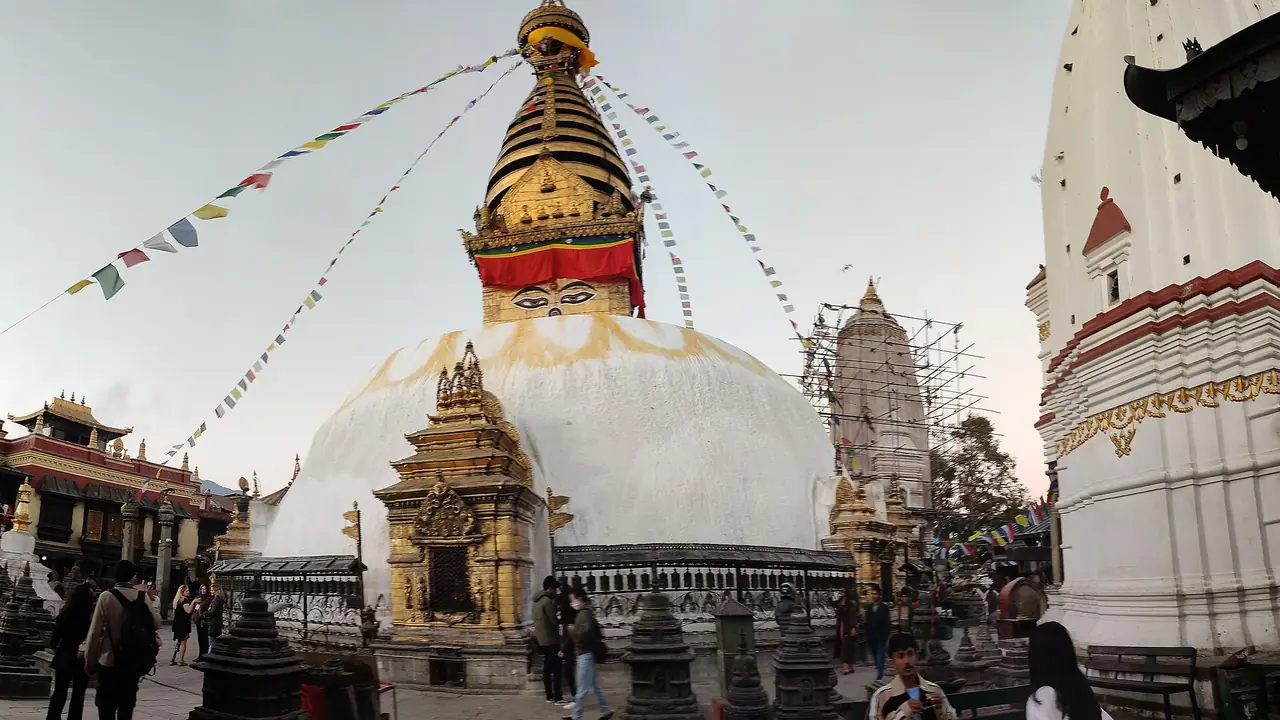
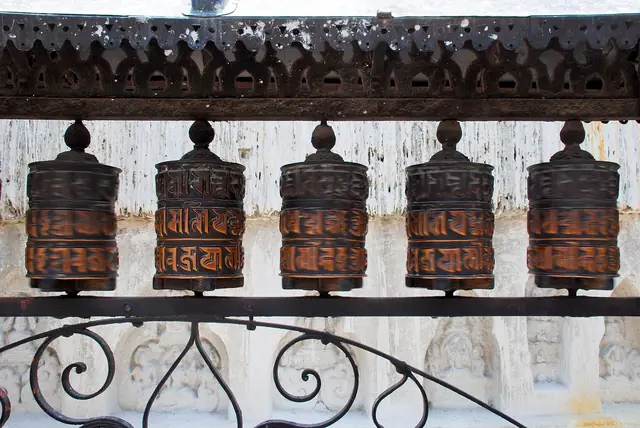
A hilltop stupa just west of Kathmandu, ringed by shrines, monasteries and prayer wheels, and known to visitors as the Monkey Temple. It is one of the seven monument zones of the Kathmandu Valley World Heritage Site, and Buddhists and Hindus alike come here to pray.

Getting there
It is about 2.6 km west of Thamel; Wikivoyage says the walk takes about 30 minutes, but the junctions are confusing, so please take a map. A taxi takes 10–15 minutes outside rush hour; guide figures range from about NPR 150 to 300–500, so agree the fare before you get in. Taxis wait on the main road by the main gate until about 9 pm.
Sites and entry fees
Fees are per person, in Nepali rupees, as published by the bodies that collect them.
- Swayambhu stupa and hilltop complex: NPR 200 (SAARC nationals: NPR 50). Foreigners pay NPR 200 and SAARC nationals NPR 50; children under 10 go free. Wikivoyage mentions a multiple-entry pass for NPR 750, and tickets are checked at the top of the eastern steps and by the main car park.
- Hariti temple: No fee found. A temple beside the main stupa to Hariti, a Buddhist protector goddess of children under 12.
- Natural History Museum of Nepal: No fee found. Founded in 1975 below the hill, it holds about 50,000 specimens of Nepal's plants, animals and fungi, including some 14,800 butterflies and moths. Wikivoyage says it opens Monday to Friday.
Fees change; check the official source before you go. Fees and rules checked on 2026-11-02.
Photos



Know before you go
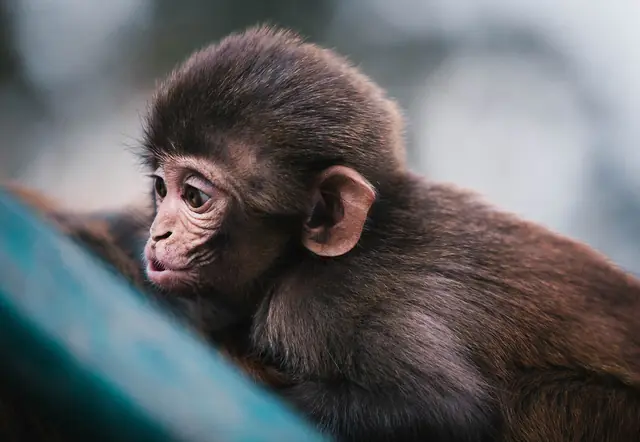
Please keep food out of sight and don't feed the monkeys: they snatch bags and snacks, and bites and scratches happen. If you are bitten or scratched, please get medical advice the same day; in Kathmandu, bite victims are treated with anti-rabies vaccine at the Sukraraj Tropical and Infectious Disease Hospital in Teku. Walk clockwise around the stupa, as local people do. The eastern stairway is long, steep and slippery in rain; if steps are hard for you, a road climbs to a car park near the top on the western side.
What you'll see
- At the top of the eastern stairway, the first thing you meet is a great golden vajra, the thunderbolt symbol of Vajrayana Buddhism.
- The stupa was renovated between 2008 and 2010, its first major renovation since 1921, when about 20 kg of gold went into re-gilding it.
- Around the stupa are smaller shrines and two tall shikhara temples, Pratappur and Anantapur, whose restoration Kantipur reported in March 2025.
- The complex also has the Swayambhu Buddhist Museum, the Hariti temple, Shantipur and a world peace pond.
- Wikivoyage counts at least 29 Buddhist monasteries and nunneries in the Swayambhu area.
Getting up the hill
- The eastern stairway, built by King Pratap Malla in the 17th century, is the classic way up; guides give 350 or 365 steps.
- On the western side a road climbs to a car park close to the top, and Wikivoyage suggests it for anyone with limited mobility.
- A ticket office stands at the top of the eastern steps and another by the main car park, so you can buy on either side.
- By bus, Wikivoyage says to take a second bus up the ring road from the Ratna Park area and watch for a row of stupas on the left to know your stop.
When to go
- Come early in the morning, when devotees walk around the stupa; travel guides say the light is better and crowds smaller then.
- Late afternoon is lovely too, and travel guides suggest it for gentler light and smaller crowds.
- Swayambhu is a living place of worship for Buddhists of every school and for Hindus, so you will share the paths with people at prayer.
Festivals
- Buddha Jayanti, the Buddha's birthday, falls on the full moon of Baisakh, usually in May, and is a national holiday; in some years the management committee has let foreign visitors in free that day.
- During Gunla, the Newar Buddhist holy month that usually falls around August, devotees climb to Swayambhu every morning playing devotional music; in 2024 the committee expected about 500,000 visitors over the month.
- Each year devotees paint the dome with white lime on religious days such as Buddha Jayanti; in June 2026 work began to clean away the thick layer that has built up.
A little history
- Legend says the valley was once a lake, and that Manjushri cut through the hills with his sword to drain it, and Swayambhu, meaning self-arisen, is believed to have appeared by itself.
- An inscription records building work ordered by King Vrishadeva in about 640 CE, and the Emperor Ashoka is said to have visited in the 3rd century BCE.
- The site was inscribed by UNESCO in 1979, and the 2015 earthquake damaged parts of the complex.
Being a good guest
- Walk clockwise around the stupa and the shrines, as local people do.
- Please ask before you step into a monastery or photograph monks and nuns.
- The monkeys are rhesus macaques that take food and shiny things from hands and bags; keep zips closed and sunglasses put away.
- A Kathmandu Post column by a senior doctor notes that no rabies case from a monkey bite has been documented in Nepal, but it cannot be ruled out, which is why a bite should always be seen by a doctor.
Eat, rest and combine
- Small cafés inside the complex overlook the stupa, and Wikivoyage gives a cappuccino there at around NPR 230–250.
- Below the hill, the Natural History Museum and the Buddha Park beside the ring road make easy additions.
- Thamel is about 30 minutes' walk away, close to Kathmandu Durbar Square, so a morning at the square and an afternoon on the hill pair nicely.
Sightseeing
- Kathmandu Valley: Three old royal cities, Kathmandu, Patan and Bhaktapur, and the temples and stupas around them. Seven of the valley's monument zones together form one UNESCO World Heritage Site, inscribed in 1979.
- Kathmandu Durbar Square: The old royal palace square of Kathmandu, also called Hanuman Dhoka or Basantapur, where Malla and Shah kings built palaces, temples and courtyards. It is one of the seven monument zones of the Kathmandu Valley World Heritage Site, inscribed in 1979, and much of it has been rebuilt since the 2015 earthquake.
- Patan (Lalitpur): Patan, also called Lalitpur, is the old Newar city just south of Kathmandu across the Bagmati River, known for centuries for its metalwork, wood carving and stone sculpture. Its royal Durbar Square, mostly from the 1600s, holds the Patan Museum and the stone Krishna Mandir, and the lanes around it are full of Buddhist courtyards and Hindu temples.
- Bhaktapur: Bhaktapur is an old Newar royal city about 13 km east of Kathmandu, with three great squares, brick lanes and carved wooden windows. Rickshaws, tuk-tuks and taxis are not allowed in the old city, so it is a lovely place to wander on foot, and it is famous for its pottery, its king curd and its New Year festival.
- Boudhanath (Boudha): Boudhanath is one of the largest stupas in the world, 36 m high, in north-east Kathmandu and part of the valley's UNESCO World Heritage Site since 1979. Tibetan refugees settled around it after 1959, and more than 50 monasteries now stand in the lanes of Boudha, which feels like a small Tibetan town gathered round its great white dome.
- Pashupatinath: Nepal's most sacred Hindu temple, to Shiva as Lord of the Animals, on the banks of the Bagmati River in eastern Kathmandu. The wider holy area covers 246 hectares, with hundreds of small shrines, open-air cremation ghats, a wooded hill and the goddess temple of Guhyeshwari.
Sources disagree
- Steps on the eastern stairway: 365 (The Longest Way Home travel guide); 350 (Wikivoyage — Kathmandu/West)
- Walking time from Thamel: about 30 minutes (2.6 km) (Wikivoyage — Kathmandu/West); about 60–90 minutes (The Longest Way Home travel guide)
- Taxi fare from Thamel: about NPR 150 on average (The Longest Way Home travel guide (main text)); NPR 300–500 (The Longest Way Home travel guide (FAQ))
Sources
- Nepal Tourism Board — Heritage site entry fees (undated)
- Wikipedia — Swayambhunath
- Wikipedia — Natural History Museum of Nepal
- Wikipedia — Gunla
- Wikipedia — Buddha's Birthday
- Wikivoyage — Kathmandu/West
- Wikivoyage — Kathmandu
- The Longest Way Home — Swayambhunath (Monkey Temple) travel guide (undated)
- The Himalayan Times (RSS) — All can enter Swayambhunath Stupa for free on Buddha Jayanti (19 May 2016)
- Onlinekhabar — Gunla, month-long festival, begins at Swayambhu (6 August 2024)
- Hamro Patro — Swayambhu Mahachaitya dome cleaning and renovation begins (14 June 2026)
- Kantipur — Restoration of Pratappur and Anantapur temples at Swayambhu (3 March 2025)
- The Kathmandu Post — Alarming monkey bite, by Dr Sher Bahadur Pun (12 July 2023)
- The Annapurna Express — Faith v flocks: a modern strategy for monkey management (15 June 2026)
Start here · Trekking · Sightseeing · Adventure · Pilgrimage
General guidance from the sources listed, not a guarantee. Rules, fees and trail conditions change; confirm with the official source or a registered trekking agency before you go.