Patan (Lalitpur)
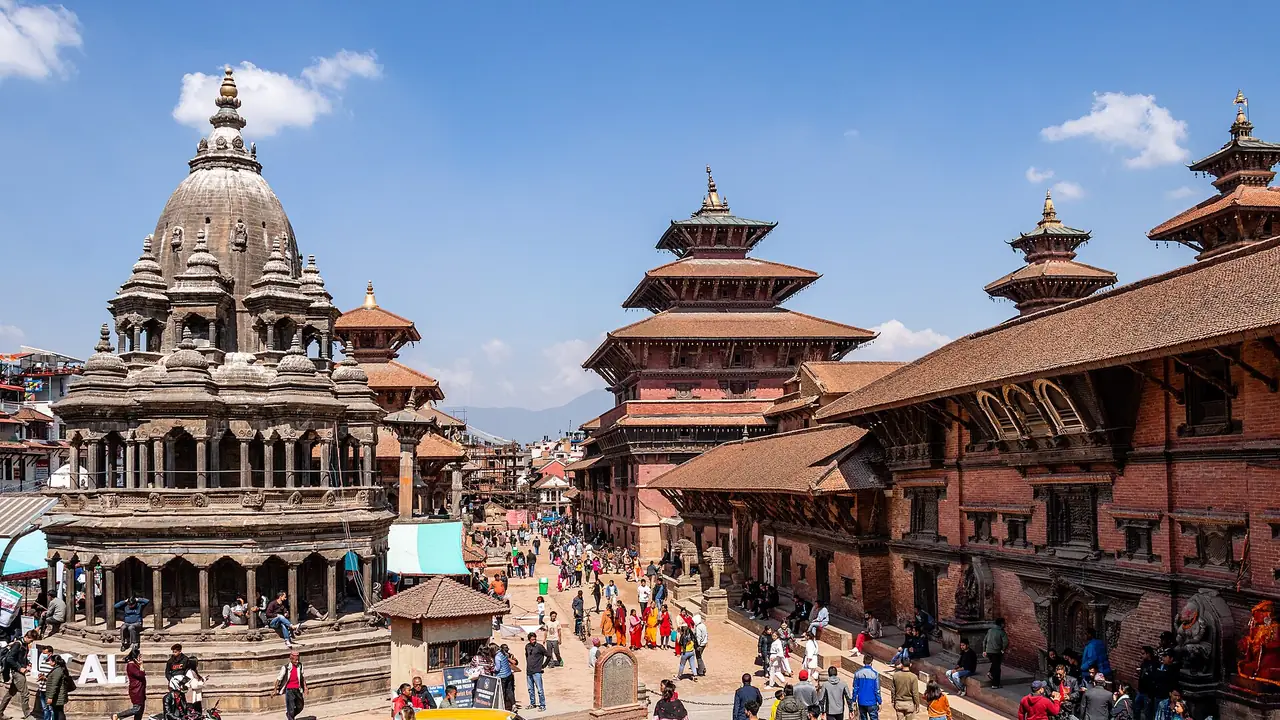
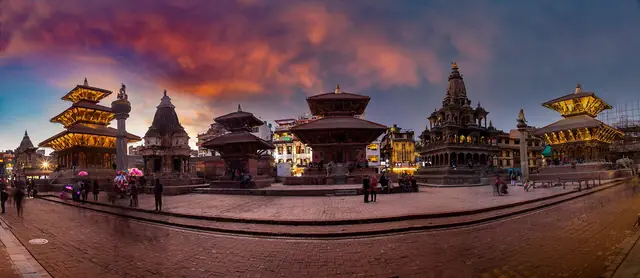
Patan, also called Lalitpur, is the old Newar city just south of Kathmandu across the Bagmati River, known for centuries for its metalwork, wood carving and stone sculpture. Its royal Durbar Square, mostly from the 1600s, holds the Patan Museum and the stone Krishna Mandir, and the lanes around it are full of Buddhist courtyards and Hindu temples.

Altitude: 1,350 m
Getting there
Patan is about 7 km south of Thamel, Wikivoyage says. A taxi costs about NPR 200–350 according to Wikivoyage's Patan page, or about NPR 500 from Thamel according to its Kathmandu page, so please agree the fare before you set off. Micro buses run from Ratna Park for about NPR 15, and Ring Road buses for NPR 15–20, after which the square is about a 15-minute walk. Walking from Thamel takes about 90 minutes and crosses the river by bridge.
Sites and entry fees
Fees are per person, in Nepali rupees, as published by the bodies that collect them.
- Patan Durbar Square and Patan Museum: NPR 1,000 (SAARC nationals: NPR 500). The royal square of the Malla kings of Lalitpur, heavily damaged in the April 2015 earthquake and since largely rebuilt. The ticket includes the Patan Museum, open 10:30 am to 5:30 pm according to Wikivoyage.
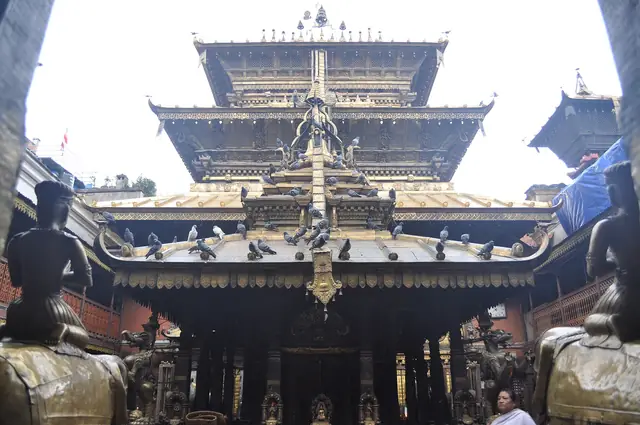
- Golden Temple (Hiranya Varna Mahavihar): NPR 100 (not confirmed by an official source). A Buddhist monastery courtyard covered in gilded metalwork and bronze statues, on Kwalakhu Road just outside the square. Diplomat Nepal (February 2026) describes a small fee of NPR 50 to 100 for tourists; Wikivoyage gives NPR 50.
- Kumbheshwar Temple: No fee found. A five-storey Shiva pagoda about 200 m north of the square, built around 1392 and one of only two free-standing five-storey temples in the valley; the other is Nyatapola in Bhaktapur. We found no entry fee.
- Mahabouddha Temple: No fee found. A Buddhist shikhara temple of terracotta tiles in the Okubahal area, dating from 1585 and loosely modelled on the Mahabodhi Temple in Bodh Gaya. It was rebuilt after the 1934 earthquake. We found no entry fee.
Fees change; check the official source before you go. Fees and rules checked on 2026-11-02.
Photos



Know before you go
Keep your square ticket where you can show it, as staff in the square check it, and Wikivoyage says frequent visitors can ask the booth to extend it, sometimes with a passport and visa. The Golden Temple is just outside the square and has its own small ticket. Take your shoes off in temple buildings and walk clockwise around shrines and stupas. Local buses and micro buses are old and crowded, and Wikivoyage notes they are hard going for people with disabilities, so a taxi may be kinder.
What you'll see
- Krishna Mandir, built in 1667 by King Siddhi Narsingh Malla, is the stone temple on the square, with a Garuda statue on a pillar facing it.
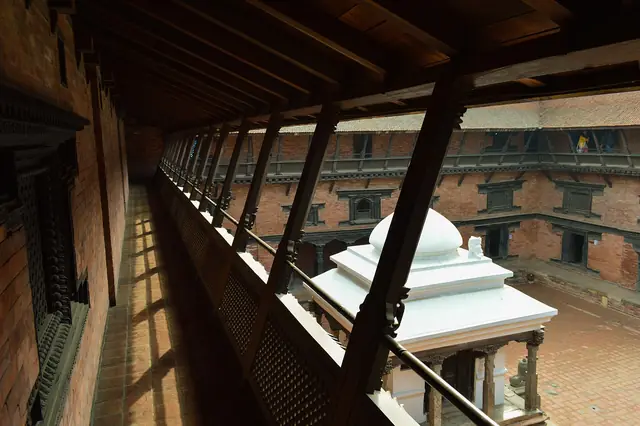
- The Patan Museum fills an old palace courtyard, Keshav Narayan Chowk. It holds over 1,100 objects, about 200 on display, mostly cast bronzes of Hindu and Buddhist deities and gilt copper repoussé, a craft Patan is famous for.
- The Golden Temple (Hiranya Varna Mahavihar) is a Buddhist courtyard gleaming with gilded and silver decoration, just outside the square.
- Kumbheshwar, a five-storey Shiva temple about 200 m north of the square, has a sacred pond; bathing there at Janai Purnima, around August, is believed to be as meritorious as bathing at the Gosainkunda lake.
- Mahabouddha, the temple of a thousand Buddhas, is covered in terracotta Buddha images; Wikivoyage says 1,008 of them, and that one family took four generations to build it.
A walk around
- Start at the square, buy your ticket at the booth at the south end or at a northern entrance, and give the museum unhurried time, as it explains much of what you will see outside.
- From the square, walk north to Kumbheshwar, about 200 m away, passing the Golden Temple on Kwalakhu Road on the way.
- Then head for Mahabouddha in the Okubahal area, where narrow lanes open into small courtyards.
- Wikivoyage notes many shops selling wooden and metal handicrafts and thangka paintings near the square; Patan's artisans have exported metalwork, wood carving and stone sculpture across Asia for centuries.
- If you can, come early or late: the Golden Temple's boy priest walks around the temple ringing a bell each morning and evening.
A little history
- The Malla kings of Lalitpur built the royal square, and most of what stands today dates from the 1600s. It has been part of the Kathmandu Valley UNESCO World Heritage Site since 1979.
- The earthquake of 25 April 2015 brought down the Hari Shankar and Char Narayan temples and the statue of King Yoganarendra Malla, and damaged Krishna Mandir, Bhimsen and several others.
- The Kathmandu Valley Preservation Trust, a local non-profit, led much of the rebuilding with the Department of Archaeology and local volunteers: Krishna Mandir's conservation finished in 2018 and Hari Shankar took four years, with its top storey completed in 2019.
- Char Narayan, built in 1566, was ceremonially reopened on 29 January 2020 after 35 months of work. Nepali Times reported in 2022 that some other restoration was still going on, so a little scaffolding may remain.
- The Golden Temple's principal priest is always a boy under twelve, serving for one month at a time.
Festivals
- Rato Machhindranath Jatra is the valley's longest festival. A towering chariot built at Pulchowk is pulled by hand through Gabahal, Mangal Bazar, Sundhara and Lagankhel to Jawalakhel over a month or more.
- In 2026 the god was placed on the chariot at Pulchowk and pulling began on 21 April, Setopati reported; Wikipedia says the closing Bhoto Jatra was set for 20 June. The dates follow the lunar calendar and change each year.
- It ends with Bhoto Jatra at the Jawalakhel ground, where a jewel-studded vest is held up on all four sides of the chariot before the head of state.
- Every 12 years a longer version starts from Bungamati, south of Patan.
- Kumbheshwar's pond is crowded at the full moon of Janai Purnima, around August.
Being a good guest
- Take your shoes off before entering temple buildings, and walk clockwise around stupas and shrines.
- At the Golden Temple, the area around the main shrine is railed off; only the priest and his family may go inside, so please admire it from the rail.
- Theft of statues has been a real problem in Patan, which is why some statues are now fenced and parts of the palace have been closed; please never touch or lean on carvings.
- During the chariot festival, Wikipedia notes one stretch between Iti and Thati where only men pull the chariot; please follow what local people do and give the pullers room.
Eat and rest nearby
- Jhamsikhel, nicknamed Jhamel, has a street of cafés and restaurants, and Wikivoyage says Jhamsikhel and Jawalakhel have bars with live music in the evenings.
- Pulchowk, at the western end of the city where the chariot is built, has the Ashok Stupa and a small park among its cafés.
- Wikivoyage mentions bookshops along Sahid Sukra Marg and in Jawalakhel, pleasant for a quiet hour.
Combine it with
- Bungamati, the village where the Rato Machhindranath idol spends six months of each year, lies south of Patan.
- Patan is an easy add-on to a day in Kathmandu, and many visitors stay in Patan or Jhamsikhel for calmer streets than Thamel.
- Bhaktapur, the third royal city, is further east and deserves its own day.
Sightseeing
- Kathmandu Valley: Three old royal cities, Kathmandu, Patan and Bhaktapur, and the temples and stupas around them. Seven of the valley's monument zones together form one UNESCO World Heritage Site, inscribed in 1979.
- Kathmandu Durbar Square: The old royal palace square of Kathmandu, also called Hanuman Dhoka or Basantapur, where Malla and Shah kings built palaces, temples and courtyards. It is one of the seven monument zones of the Kathmandu Valley World Heritage Site, inscribed in 1979, and much of it has been rebuilt since the 2015 earthquake.
- Bhaktapur: Bhaktapur is an old Newar royal city about 13 km east of Kathmandu, with three great squares, brick lanes and carved wooden windows. Rickshaws, tuk-tuks and taxis are not allowed in the old city, so it is a lovely place to wander on foot, and it is famous for its pottery, its king curd and its New Year festival.
- Swayambhunath: A hilltop stupa just west of Kathmandu, ringed by shrines, monasteries and prayer wheels, and known to visitors as the Monkey Temple. It is one of the seven monument zones of the Kathmandu Valley World Heritage Site, and Buddhists and Hindus alike come here to pray.
- Boudhanath (Boudha): Boudhanath is one of the largest stupas in the world, 36 m high, in north-east Kathmandu and part of the valley's UNESCO World Heritage Site since 1979. Tibetan refugees settled around it after 1959, and more than 50 monasteries now stand in the lanes of Boudha, which feels like a small Tibetan town gathered round its great white dome.
- Pashupatinath: Nepal's most sacred Hindu temple, to Shiva as Lord of the Animals, on the banks of the Bagmati River in eastern Kathmandu. The wider holy area covers 246 hectares, with hundreds of small shrines, open-air cremation ghats, a wooded hill and the goddess temple of Guhyeshwari.
Sources disagree
- Patan Durbar Square, SAARC nationals: NPR 500 (Nepal Tourism Board (undated)); NPR 250 (Third Rock Adventures, Holidify and other travel sites)
- Golden Temple entry fee, foreigners: NPR 50 to 100 for tourists (range, no categories given) (Diplomat Nepal, February 2026); NPR 50 (Wikivoyage — Patan (undated))
- Golden Temple founding: 12th century, by King Bhaskar Varman (Wikipedia article text; Diplomat Nepal); completed 1409 (Wikipedia infobox); early 1400s (Wikivoyage)
- Taxi from Thamel/Kathmandu to Patan: NPR 200–350 (Wikivoyage — Patan); NPR 500 one way from Thamel (Wikivoyage — Kathmandu)
- Distance from Thamel: 7 km south of Thamel (Wikivoyage — Kathmandu); about 4 km south across the Bagmati (our own Kathmandu guide (guides-text.ts), probably measured from the city centre)
- Rato Machhindranath chariot height: about 25 m (Wikivoyage — Patan); 60 feet (about 18 m) (Wikipedia — Rato Machhindranath Jatra)
- Patan Museum founding: inaugurated 1997 by King Birendra (Wikipedia article text); established 1982 (Wikipedia infobox)
Sources
- Wikivoyage — Patan
- Wikivoyage — Kathmandu (Patan distance and taxi fare)
- Wikipedia — Patan Durbar Square
- Wikipedia — Patan Museum
- Wikipedia — Lalitpur, Nepal
- Wikipedia — Hiranya Varna Mahavihar
- Wikipedia — Kumbheshwar Temple
- Wikipedia — Mahabouddha Temple
- Wikipedia — Rato Machhindranath Jatra
- Setopati — Rato Machhindranath chariot festival begins (21 April 2026)
- Diplomat Nepal — Nepal's Golden Temple: living symbol of the valley's living heritage (12 February 2026)
- Nepali Times — Preserving Patan post-earthquake (24 September 2022)
- The Kathmandu Post — Rebuilding works begin at Patan Durbar Square (6 May 2016)
- Heidelberg University (DANAM) — Ceremonial reopening of the Char Narayan Temple in Patan (29 January 2020)
- Nepal Tourism Board — Heritage site entry fees (undated)
Start here · Trekking · Sightseeing · Adventure · Pilgrimage
General guidance from the sources listed, not a guarantee. Rules, fees and trail conditions change; confirm with the official source or a registered trekking agency before you go.