More adventure in Nepal: zipline, canyoning, mountain biking, climbing and more
Beyond trekking, Nepal offers steep ziplines, waterfall canyoning, valley-rim bike rides, crags near Kathmandu and early-morning flights past Everest. Here is where each one happens, roughly what it costs, the best season, and the honest safety picture, so you can pick well and enjoy it.

Current notice: Since 4 May 2026 the Department of Tourism has required every bungee, swing, canyoning, zipline and skydiving operator to hold its licence; in July 2026 only 56 companies were licensed, so please ask to see the licence before you pay.
The essentials
- Only the Department of Tourism can license adventure activities. In May 2026 it told unlicensed bungee, swing, canyoning, zipline and skydiving operators to get permits or stop, and in July 2026 only 56 companies were licensed.
- Pokhara's zipline from Sarangkot to Hemja is about 1.8 km long; an operator listing gives US$70 for foreigners, a 35–125 kg weight range and a minimum age of 12.
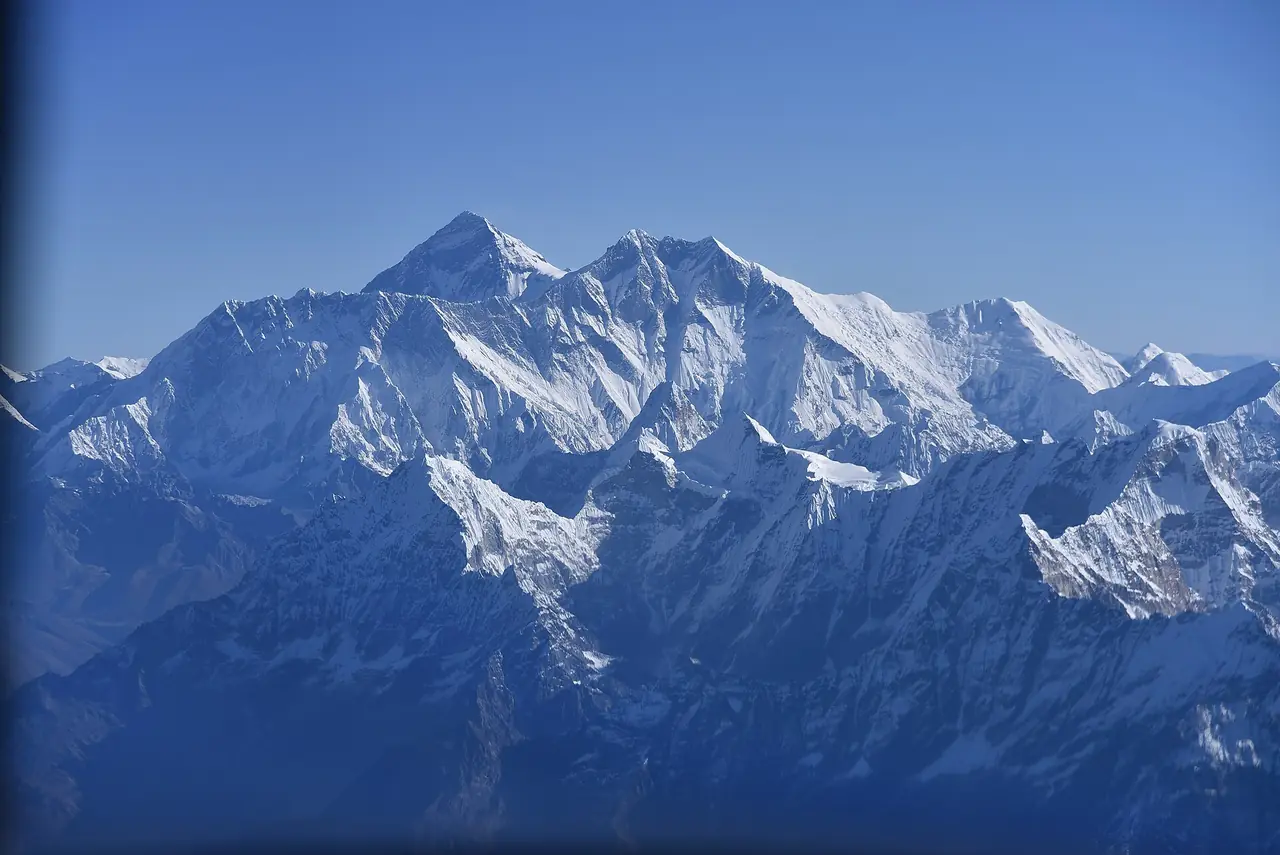
- Everest mountain flights leave Kathmandu daily from about 6.15 am and last around an hour; Buddha Air promises every passenger a window seat.
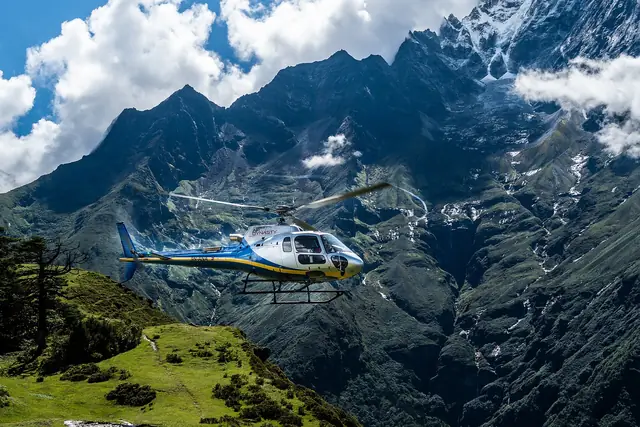
- Helicopter tours that land at Kala Patthar take you to 5,545 m in a morning, so please take altitude seriously; tourist flights above Lukla have been disputed since December 2024.
- Please check your travel insurance names each activity you plan, and that it covers helicopter rescue; the UK government advises this for Nepal.
- Paragliding, bungee and rafting each have their own guide on this site.
Before you book anything
- Under Nepal's Tourism Act, only the federal Department of Tourism can license adventure activities. On 4 May 2026 it gave unlicensed operators of bungee, swings, canyoning, skydiving, ziplines, zip coasters, jet skis and motorboats 30 days to apply or close (The Himalayan Times).
- By late July 2026 only five or six businesses had started the process, and the department counted just 56 licensed companies nationwide (Kathmandu Post). So it is fair, and quite normal, to ask any operator for its Department of Tourism licence before you pay.
- Why it matters: in July 2023 a 22-year-old woman from Pokhara died after a fall while canyoning at a waterfall in Ghalel, Machhapuchhre Rural Municipality (Republica). Onlinekhabar, reporting the same month, said many ventures ran without approval and without regular safety checks.
- Good questions to ask: who is the instructor and what training do they hold, when the harnesses, ropes and helmets were last replaced, what the weight and age limits are, and what happens if the weather turns. A calm, clear answer is a good sign; a vague one is a reason to walk away.
- Many travel insurance policies list adventure activities one by one. Please read yours for each activity you plan, and check it covers helicopter rescue; the UK Foreign Office advises cover for mountain rescue and helicopter costs in Nepal.
- Paragliding, bungee and white-water rafting have their own detailed guides here, including the rules brought in after past accidents.
Ziplines: Pokhara and beyond
- Pokhara's zipline runs from Sarangkot down to Hemja. Onlinekhabar gives it as 1,850 m long and calls it one of the steepest in the world; it opened in 2010 as Nepal's first, run by Highground Adventures.
- An operator listing (undated, ©2026) gives a 600 m vertical drop, US$70 for foreigners and NPR 9,000 for SAARC citizens, a weight range of 35–125 kg, a minimum age of 12 and operation in all seasons. The ride itself is short, so most of your time goes on the drive up and the briefing.
- Pokhara's own tourism site pairs the zipline with the Skyscreamer giant swing and ATV rides at Hemja, where the line lands.
- At Kushma in Parbat, a line crosses the Kali Gandaki gorge. Onlinekhabar says it is 1,480 m and opened on 9 January 2022; Republica's test-run report gives 1,400 m, a launch 238 m above the river, speeds of up to about 130 km/h and a ride of 60–90 seconds.
- Onlinekhabar's 2022 list also includes Dhulikhel (a 1,100 m superman line), Gadhi in Makawanpur (1,100 m), Ghyampe Danda in Bhaktapur (1,200 m), Nuwakot (about 1,300 m), Bhedetar–Devisthan near Dharan (650 m, about 45 seconds) and a short line on Chandragiri.
- A caution: the Kathmandu Post found in 2026 that a council-run zipline at Kettuke in Okhaldhunga had operated for two years without Department of Tourism approval, and that helicopters fly through the area. Licensing is not just paperwork.
Sky cycling, swings, balloons and ultralights in Pokhara
- At Sarangkot, the Annapurna Cable Car company runs a zipline, sky cycling (riding a bicycle along a wire high above the ground) and a canyon swing, Nepal Traveller reported in December 2022. The cable car from Lakeside takes about 9 minutes.
- Balloon Nepal flies hot-air balloons over Pokhara, and Pokhara's tourism site lists a sunrise flight from Pame. In April 2024 the Kathmandu Post gave a half-hour flight at Rs 9,500 for Nepali visitors, rising as high as 9,000 ft above the ground; it gave no fare for foreigners.
- Onlinekhabar's 2022 report gave US$100 for foreigners for a 30–40 minute flight, with up to eight people per balloon, and said flights stop during the monsoon because the weather is unsuitable. Please treat both prices as dated and check before you go.
- Wrap up warmly for a balloon: it is cold at height, so the Kathmandu Post suggests gloves, a hat and proper shoes rather than sandals.
- Ultralight planes fly from Pokhara's old airport. As our Pokhara page explains, they have had fatal crashes, so the same questions about licence and insurance apply.
Canyoning
- Canyoning means walking, sliding, jumping and abseiling down a stream and its waterfalls with ropes and a guide. Megh Ale brought it to Nepal after 1996, and the Himalayan Times counted over nine canyoning spots in the Bhote Koshi valley alone in March 2025.
- Jalbire, in Chitwan district just off the Kathmandu–Narayanghat road near Mugling, is the classic first canyon. Nepal Traveller (April 2026) gives a 3–4 hour drive from Kathmandu and abseils of up to 25–30 m, with guides providing the technical kit.
- The Bhote Koshi, about 113 km north-east of Kathmandu, has popular spots at Jambo Khola, Handi Khola and Kavre Khola (Nepali Times). Near Pokhara, Lwang Ghalel has the 107 m Kudi Fall, and Sundarijal, on Kathmandu's northern edge, is also used for day trips.
- Seasons: Nepal Traveller suggests September to June, with strong water in October and November and gentler conditions for beginners from March to June; it says July and August trips may be restricted. A 2016 Nepali Times piece instead praised the monsoon at Jalbire, so ask what the water is doing the week you go.
- Safety: please only go with a licensed company and a trained guide, wear a helmet, wetsuit and proper canyoning shoes, and avoid loose clothing that can catch in a harness. There is still no nationally recognised canyoning guide licence (The Himalayan Times, 2025), so ask what training the guide holds.
- We found no dated, independent price for canyoning. Day trips usually include transport, lunch and gear, but please check whether insurance is included; often it is not.
Mountain biking
- The Nepal Tourism Board lists easy rides to Budhanilkantha, Sankhu, Dakshinkali, Godavari and Thankot, and longer valley-rim routes to Nagarjun, Kakani and Shivapuri (north), Nagarkot and Dhulikhel (east), Phulchowki and Lakuri Bhanjyang (south) and Chandragiri, Chitlang and Pharping (west).
- Around Pokhara, Wikivoyage suggests a loop around Phewa Lake, a Sarangkot–Naudanda–Hemja loop and a ride to Dobindy Pass. Rough Guides recommends a guide for the more complex Pokhara routes, because maps go out of date quickly.
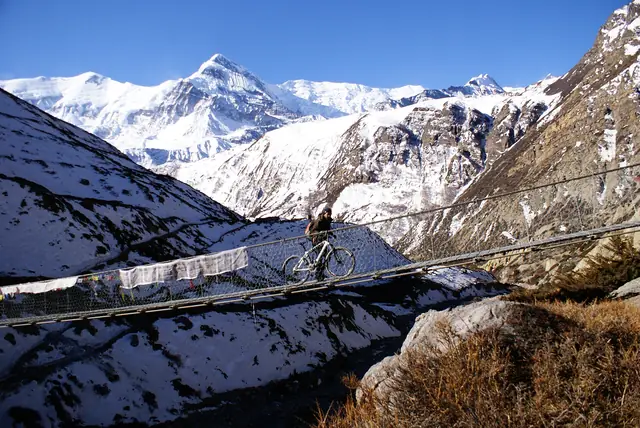
- For a big trip, Rough Guides describes riding up the Marsyangdi from Besisahar towards Manang (expect to carry the bike for some of it), or the Kali Gandaki road from Beni to Jomsom. Upper Mustang needs a special permit, and mountain bikes are banned in Sagarmatha (Everest) National Park.
- Renting: Rough Guides gives about Rs 500 a day for a basic bike with V-brakes, Rs 1,000 for an older hardtail and Rs 2,000 for full suspension, usually against your passport as a deposit. Please check the brakes, tyres, chain, gears and spokes, and ask for a helmet and a bell.
- Trail manners: give way to walkers and animals, ring your bell early, and ask the way by asking how long rather than how far. Rough Guides notes that tight Lycra can embarrass people in villages, and that solo riding has been barred in Nagarjun forest after attacks on tourists.
- Season: Rough Guides calls October to December the best time; January to March is also good. From mid-June to late September trails are muddy, although Mustang, in the rain shadow, rides well then.
Rock climbing
- Nagarjun forest, about 20 minutes from central Kathmandu, had 17 routes of up to 40 m in 2014 and suits beginners (Nepali Times). It is inside Shivapuri Nagarjun National Park, so please climb with a guide and follow the rangers' rules.
- Hattiban, about an hour's drive south of Kathmandu, has many routes of different grades, and Balaju, half an hour away, had nine routes from 4a to 7b+ (Nepali Times, 2014).
- Near Pokhara, the city's tourism site lists rock climbing at Methlang, and Wikivoyage mentions a climbing course near Lakeside.
- For a rainy day, Kathmandu has indoor climbing walls; the Nepali Times named one in Thamel and the Pasang Lhamu Sports Climbing Centre in Maharajganj.
- Prices we found are old: in 2014 a guided day at Nagarjun cost about US$55 with transport, lunch and gear. Please check your harness, rope and helmet, and that the bolts and anchors look sound, before you climb.
Mountain flights past Everest
- These are early-morning sightseeing flights from Kathmandu's domestic terminal that fly along the Himalaya and return without landing. Buddha Air says its Everest Experience runs daily from 6.15 am and lasts 50 minutes to an hour, climbing to almost 25,000 ft.
- Seats: Buddha Air says the planes fly half full so that everyone gets a window, and it recommends September to April for the clearest views. You may see some 20 peaks, including Langtang Lirung, Shishapangma, Cho Oyu, Lhotse and Everest.
- Price: Wikivoyage gives US$197 for a one-hour flight (undated). In November 2020 the Himalayan Times reported Buddha Air at Rs 8,900 and Yeti Airlines at Rs 8,999 for Nepali passengers. Please check the current foreigner fare with the airline.
- Weather decides everything. The UK Foreign Office says mountain flights are often delayed or cancelled by poor weather, so book early in your stay and keep a spare morning to rebook.
- A calm word on safety: the UK Air Safety List currently includes all Nepali airlines. In September 2011 a Buddha Air mountain flight crashed near Lalitpur in cloud on its return, killing all 19 people on board; investigators blamed pilot error and required ground-proximity warning systems on all airlines (Wikipedia).
Helicopter tours: Everest and Annapurna
- A typical Everest tour flies Kathmandu–Lukla–Kala Patthar and back with a breakfast stop at Hotel Everest View (3,880 m). One operator's 2026 listing gives about US$1,350 a seat on a shared flight, US$6,500 for a private charter and US$600 extra to land at Kala Patthar for 10–15 minutes, with only two passengers per landing. Helicopter tours of the Annapurnas are also sold; we found no independent price for them.
- Altitude: Kala Patthar is 5,545 m. The CDC says flying straight to over 3,400 m puts people at high risk of altitude illness, although a short visit followed by a return to low altitude is much easier on the body. Please move slowly, drink water, and tell the pilot at once if you feel dizzy, breathless or confused; if you have heart or lung problems, ask your doctor first.
- Rules are in flux. After a 2021 incident, landings were limited to Lukla, Namche and Syangboche, and after a 2023 crash the park became stricter, with heavier groups split up for landings (Onlinekhabar, 2024).
- In December 2024 Sagarmatha National Park and the local municipality banned tourist helicopter flights above Lukla from 1 January 2025. The Civil Aviation Authority said the park had no legal ground (Kathmandu Post); locals blocked helipads with flags in January 2025 (Khabarhub), and the municipality banned the flights again in April 2025 (Kantipur). We found no clear 2026 update, so please ask the operator what is allowed on your date.
- Crashes have happened. In July 2023 a Manang Air helicopter on a sightseeing flight crashed near Lamjura Pass, killing the pilot and five Mexican tourists (AIN Online); in August 2024 an Air Dynasty helicopter crashed in Nuwakot three minutes after leaving Kathmandu, killing five (Kantipur); and in October 2025 an Altitude Air rescue helicopter crash-landed at Lobuche, though the pilot was unhurt (The Himalayan Times).
- On rescues: in March 2026 Nepal charged 32 people over a fake-rescue scheme linked to more than US$19.6 million in insurance claims (Kathmandu Post). If someone urges you to be flown out, ask for a doctor's opinion and call your insurer first.
On the water and in the jungle
- On Phewa Lake you can hire a rowing boat or canoe for the day; Wikivoyage warns that canoes can be hard to steer on flat water. Please wear a life jacket.
- To learn to kayak, schools are mostly based in Pokhara. Rough Guides describes a half-day start on Phewa and then several days on the warm Seti River, with five-day courses from around US$300 and kayak hire of about US$25 a day.
- At Chitwan, canoe trips, jeep safaris and guided jungle walks are the main activities; our Chitwan page covers prices, timings and safety near rhinos and crocodiles.
- For white-water rafting on the Trishuli, Seti, Bhote Koshi and beyond, please see our rafting guide. The canyon swings at Kushma and on the Bhote Koshi are covered in our bungee guide.
Skydiving and peak climbing
- Everest Skydive is a once-a-year event, not a drop-in activity. Its 18th edition ran from 10 to 13 November 2025 at the Ama Dablam and Syangboche drop zones, with an emergency medical team on hand, and the organisers said a 19th was planned for 2026 (The Himalayan Times). We found no reliable current price.
- Trekking peaks such as Island Peak (6,165 m, in the Everest region) involve glacier travel, fixed ropes and steep snow and ice, so they are real climbs rather than long walks (Wikipedia). Please see our trekking pages for routes and acclimatisation.
- The Nepal Mountaineering Association manages 27 peaks, and the Kathmandu Post (August 2025) said foreign climbers typically pay US$175–500 in royalty, depending on height and season, after fees were revised from 1 September 2025.
- The same report said 97 peaks in Karnali and Sudurpaschim are royalty-free for two years from July 2025. They are remote, so they suit experienced climbers with a licensed agency.
- Please book any climb through a licensed agency with a qualified guide, and check that your insurance covers climbing to that height and helicopter rescue.
Photos


Sources
- The Himalayan Times — Get permits or shut down, tourism department tells adventure operators (7 May 2026)
- Kathmandu Post — Built for adventure, held back by regulations (24 July 2026)
- Onlinekhabar — Adventure tourism in Nepal and safety (3 August 2023)
- Republica — Tragic accident claims young life during canyoning (27 July 2023)
- UK FCDO — Nepal travel advice: safety and security
- CDC Yellow Book — High-altitude travel and altitude illness (2026 edition)
- Onlinekhabar — Zipline places in Nepal (21 January 2022)
- Republica — Successful test of world's second-longest superman zipline in Parbat (22 October, year not stated)
- North Nepal Trek (operator listing) — Zipline in Pokhara (undated, ©2026)
- Pokhara Metropolitan City tourism site — Ultimate Thrill package
- Nepal Traveller — Adventure activities in Pokhara's sky (15 December 2022)
- Kathmandu Post — Hot air balloons soar in the skies of Pokhara (13 April 2024)
- Onlinekhabar — Pokhara hot air balloon flights to resume (2 August 2022)
- The Himalayan Times — Canyoning: a hidden adventure gem awaits spotlight (4 March 2025)
- Nepali Times — Falling with water (15 July 2016)
- Nepal Traveller — Jalbire Canyon: Nepal's waterfall playground (23 April 2026)
- Nepal Tourism Board — Mountain biking in Kathmandu
- Rough Guides — Nepal: mountain biking, route-finding and timing
- Rough Guides — Nepal: rafting and kayaking
- Wikivoyage — Pokhara
- Wikivoyage — Kathmandu
- Nepali Times — Let's rock (8 August 2014)
- Buddha Air — Everest Experience mountain flight
- The Himalayan Times — Mountain flights resume with various offers (30 November 2020)
- Wikipedia — Buddha Air Flight 103
- Peregrine Treks (operator listing) — Everest Base Camp helicopter tour (2026 prices)
- Onlinekhabar — Landing in the Everest region: new helicopter rules (3 April 2024)
- Kathmandu Post — Everest helicopter flights face stronger headwind (18 December 2024)
- Khabarhub — Commercial helicopter flights to Everest region suspended (6 January 2025)
- Kantipur (English) — The municipality again banned commercial helicopters in the Khumbu area (28 April 2025)
- AIN Online — Nepal helicopter crash claims six lives near Mt Everest (11 July 2023)
- Kantipur (English) — Dynasty helicopter crash within 3 minutes of flight: 5 people died (8 August 2024)
- The Himalayan Times — Altitude Air helicopter crashes in Lobuche, pilot safe (29 October 2025)
- Kathmandu Post — Nepal charges 32 in fake rescue scam (23 March 2026)
- The Himalayan Times — Thai skydiver sets dual Everest records as 18th Everest Skydive concludes (14 November 2025)
- Kathmandu Post — Everest fees rise but Nepal's hidden peaks are now free (9 August 2025)
- Wikipedia — Island Peak
Fees and rules checked on 2026-11-02.
Getting to Nepal · Arriving at Kathmandu airport · Nepali words to know before you land · What's normal in Nepal, and might surprise you · Phones, SIM cards and internet in Nepal · Getting around Nepal · Money in Nepal · Staying safe in Nepal · What to pack for Nepal · Food and drink in Nepal · Kathmandu: where to stay, what to see and what to eat · Kathmandu after dark: where to hang out, eat, drink and dance · Paragliding in Nepal: Sarangkot, other sites and how to fly safely · Bungee jumping in Nepal · Rafting and kayaking in Nepal · Visiting Nepal's sacred sites: a pilgrim's guide
Start here · Trekking · Sightseeing · Adventure · Pilgrimage
General guidance from the sources listed, not a guarantee. Rules, fees and trail conditions change; confirm with the official source or a registered trekking agency before you go.